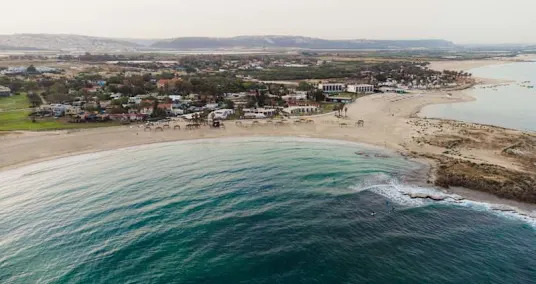
The discovery was made in an ancient shipwreck in the Dor Lagoon near the Carmel Coast, where archaeologists recovered nine pieces of unprocessed iron known as “blooms.”
Researchers from the University of Haifa said Wednesday that an underwater excavation off Israel’s northern Mediterranean coast uncovered what they described as the earliest known cargo of raw iron transported by ship, dating back around 2,600 years, Xinhua reported.
The discovery was made in an ancient shipwreck in the Dor Lagoon near the Carmel Coast, where archaeologists recovered nine pieces of unprocessed iron known as “blooms.” According to the university, the find provides direct evidence of how iron was transported in its earliest commercial stages.
The material was preserved in its original form, having solidified directly in a smelting furnace without undergoing forging or further refinement. Researchers said this distinguishes the cargo from later iron artifacts that typically show signs of shaping or tool-making.
Unlike copper and bronze, which could be melted into liquid form in ancient production processes, iron was heated with charcoal to produce a solid, porous mass. That mass was generally hammered to remove impurities and create denser material suitable for tools and implements.
The recovered blooms showed no indication of that secondary processing stage, suggesting they were transported immediately after production.

Earliest iron shipment discovered in ancient Mediterranean wreck
To determine the age and condition of the cargo, researchers conducted microscopic and chemical analyses.
Radiocarbon dating was also carried out on charred wood embedded in one of the pieces, helping confirm the timeline of the shipment. The findings were published in the journal Heritage Science.
Researchers said the cargo indicates that iron was being moved in raw form from production sites to other locations for further processing, pointing to a level of specialization in ancient manufacturing and trade networks in the Mediterranean.
The University of Haifa said the discovery provides new insight into early iron production and distribution practices in the region.
LATEST POSTS
- 1
 Will Comet C/2025 R3 (PanSTARRS) be the 'great comet' of 2026?
 - 2Figuring out Significant Regulations and Guidelines for Organizations
- 3Israel halts defense sales to France, citing 'hostile attitude,' sources tell 'Post'
- 4Sheinelle Jones will cohost fourth hour of 'Today' with Jenna Bush Hager: Here's what to know about her
- 5Navy-Marine Corps Relief Society provides emergency grants to families displaced by Iran war




- Congo declares its latest Ebola outbreak over, after 43 deaths
- Benedict Cumberbatch takes on something even Sherlock can’t solve: male grief
- Honda’s Biggest Flex Isn’t Its Superbikes, It’s Selling 500K Bikes In One Month
- Shipping: The Corridors of Trade and the Coming of Another Period
- Finding the Universe of Workmanship: Individual Encounters in Imagination
- Israel’s mixed messaging on Christmas draws controversy
- Top Pastry: What's Your Sweet Treat of Decision?
- Met Gala 2026 will celebrate fashion as an 'embodied art form': A guide to the theme, dress code, cochairs and hosting committee of the starry event
- 6 Top Computer game Control center