When you buy through links on our articles, Future and its syndication partners may earn a commission.

Before a space telescope ever reaches orbit, and long after satellites are up there, NASA has another way to do frontier science: high-altitude scientific balloons. These balloons can loft instruments to roughly 120,000 feet (about 36.6 kilometers) — high in the stratosphere, above most of Earth's atmosphere—at a fraction of the cost and complexity of a space mission, while still enabling serious astrophysics, heliophysics, Earth science, and technology testing.
Antarctica is one of the best places on Earth to fly these missions. NASA's annual Antarctic Long-Duration Balloon campaign operates from a site on the Ross Ice Shelf near the U.S. National Science Foundation's McMurdo Station.
In the austral summer, near-constant sunlight and stable polar wind patterns can support extended-duration flights, allowing payloads to gather data for days to weeks as they circle the continent.
What is it?
NASA's first scientific balloon flight of the 2025 Antarctica Balloon Campaign lifted off from the agency's Antarctic facility at 5:30 a.m. NZST Tuesday, Dec. 16 (11:30 a.m. Monday, Dec. 15 U.S. Eastern Time) and reached float altitude carrying an experiment called GAPS — the General AntiParticle Spectrometer.
Once airborne, NASA reported the balloon was floating at about 120,000 feet (36 kilometers) above Earth's surface.
Where is it?
This image was taken near Antarctica Rubilotta where the balloon launched.

Why is it amazing?
GAPS' goal is to look for rare particles from space called antimatter nuclei, specifically antideuterons, antiprotons, and antihelium. Scientists have never clearly seen antideuterons or antihelium in cosmic rays before. If GAPS detects even a single antideuteron, it could give us important clues about the mysterious substance known as dark matter, which makes up most of the universe but is invisible to us. GAPS uses a time-of-flight system to measure how fast the particles are moving and a tracker system to record the interaction.
Now that the balloon has been launched, the GAPS project is underway, hopefully revealing more about the universe around us in due course.
Want to learn more?
You can learn more about antimatter and dark matter.
LATEST POSTS
- 1
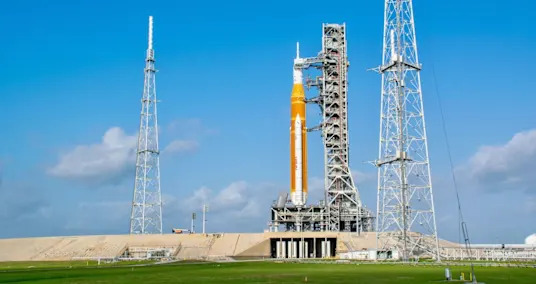
 'We are ready': NASA still on track to launch Artemis 2 astronauts to the moon April 1
 - 2Instructions to Explore the Therapy Choices for Cellular breakdown in the lungs
- 3NASA to bring astronauts home from space station early due to a medical issue
- 4The Way to Recuperation: Defeating Dependence
- 5Washington state experiences historic flooding as Skagit River hits record high level. See flooding maps, highway closures and forecasts.



- Russia earning billions from Hormuz blockade, German trade body says
- India's top court hears challenges to ruling on women's entry into temple
- Find the Abilities Required for Advanced Advertising Position
- 10 Delectable Specialty Mixed drinks
- Scientists find twisting magnetic waves on the sun. Could this help solve a huge solar mystery?
- IDF Givati Brigade soldier arrested, charged in suspected Iran espionage
- A Couple of Modest Guitars for 2024
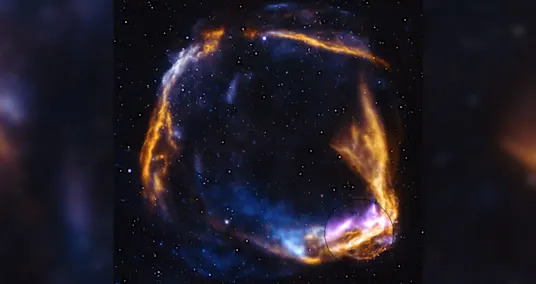
- New portrait of the oldest-known supernova | Space photo of the day for March 27, 2026
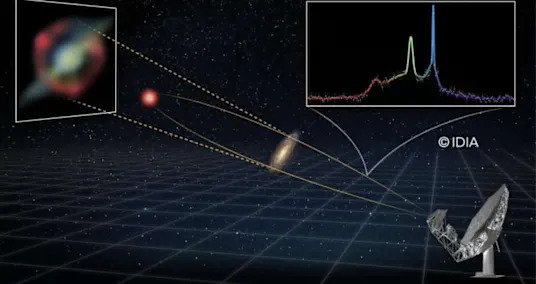
- Record-breaking 'space laser' erupts from merging galaxies 8 billion light-years away